.png&w=384&q=75)
Schedule a Free Consultation
Request a free consultation now to discuss your treatment options at our modern clinic in Antalya Konyaaltı.
Get a Free QuoteWhatsApp ConsultationDental Scaling (Periodontology)
Ultrasonic tartar removal, root planing, and premium periodontal therapies to safeguard gum health and bone support.
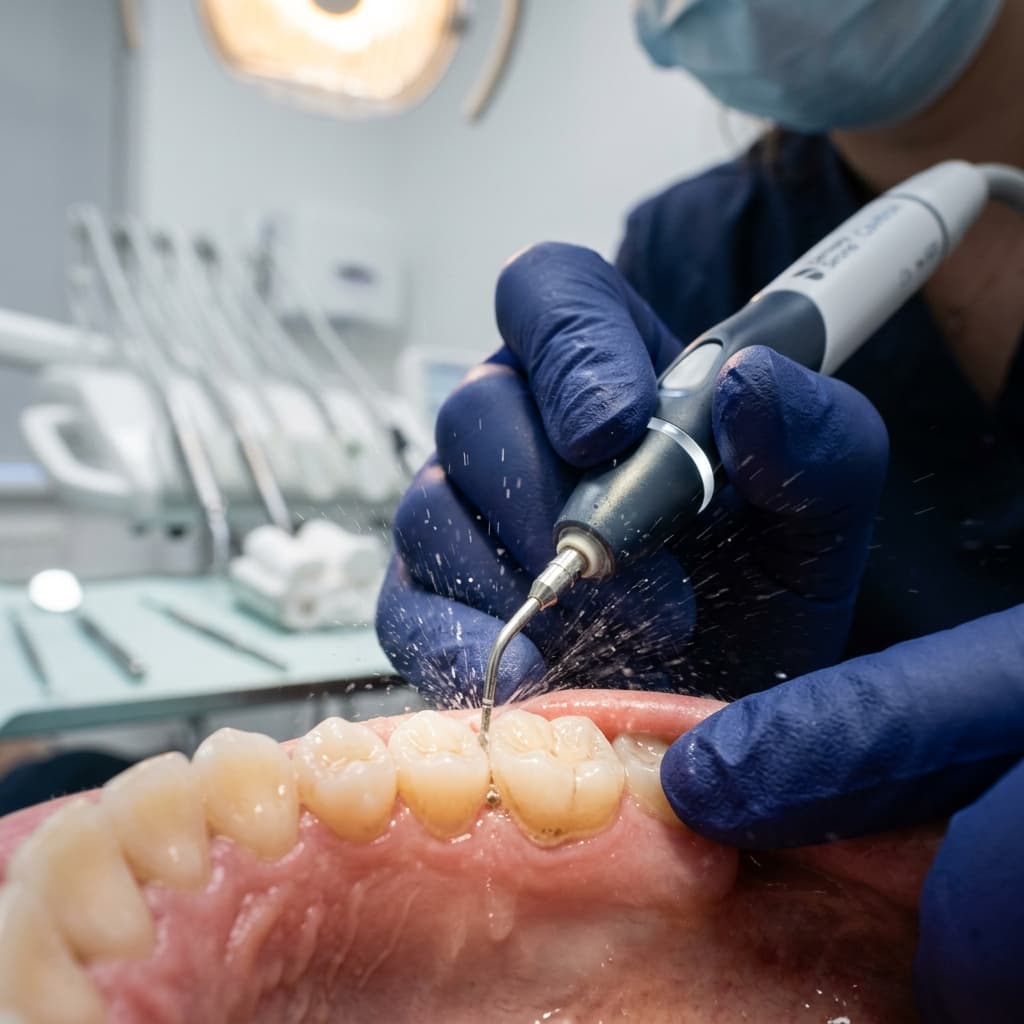
Periodontology is the specialized branch of dentistry focused on the health of the supporting structures of your teeth, including the gums (gingiva), periodontal ligament, and alveolar jawbone. Dental scaling and root planing—often referred to as professional deep cleaning—are the foundational treatments used to prevent and combat periodontal diseases. Gum disease progresses silently, beginning as gingivitis (reversible inflammation of the gums characterized by redness and bleeding) and, if left untreated, advancing to periodontitis. Periodontitis is a chronic bacterial infection that destroys the bone supporting your teeth, leading to gum recession, tooth mobility (loosening), and eventual tooth loss. At our clinic, Uzm. Dt. Yusuf Kurt utilizes advanced ultrasonic scaling devices, micro-surgical curettes, and air-polishing systems to eradicate bacterial deposits and protect your oral and systemic health. The biology of plaque and calculus (tartar) formation: Every day, a soft, sticky film of bacteria called dental plaque forms on your teeth. Plaque is a biofilm composed of bacteria, salivary proteins, and food debris. If plaque is not removed through daily brushing and flossing, it absorbs calcium and phosphate minerals from your saliva, undergoing mineralization within 24 to 72 hours to turn into a hard substance known as dental calculus (tartar). Once calculus forms, it cannot be removed with a toothbrush or floss; it can only be cleared by a dental professional using specialized instruments. The rough surface of tartar acts as a breeding ground for pathogenic bacteria, releasing toxins that trigger an inflammatory immune response in the gums. This chronic inflammation causes the gum tissue to pull away from the teeth, creating deep 'periodontal pockets' where anaerobic bacteria multiply and eat away the jawbone. Ultrasonic scaling, root planing, and air-flow polishing: Our periodontal hygiene protocol utilizes a combination of advanced technologies: - Ultrasonic Scaling: We use piezoelectric scaling instruments that generate high-frequency micro-vibrations to shatter and dislodge hard tartar blocks from the enamel. The scaling tip emits a continuous stream of water, creating microscopic bubbles that collapse (cavitation effect). This cavitation disrupts bacterial cell walls and flushes out the pockets. - Root Planing (Curettage): For patients with deeper periodontal pockets, we perform root planing. Using hand-held Gracey curettes, we gently clean beneath the gum line, scraping away the infected cementum (root surface layer) and smoothing the root. This smooth surface discourages bacteria from re-attaching and allows the gum tissue to heal and tighten around the tooth. - Air-Flow Polishing: We finish the treatment using an air-polishing system that sprays a mixture of warm water, air, and fine glycine or sodium bicarbonate powder. This sweeps away superficial stains from coffee, tea, and smoking, leaving the enamel smooth and polished. The systemic health connection: Gum disease is not just an oral issue; it has a profound impact on your entire body. The chronic inflammation and bacteria in periodontal pockets can enter the bloodstream through diseased gums. Clinical studies have established strong links between periodontitis and systemic health conditions, including cardiovascular disease (increased risk of stroke and heart attack), uncontrolled diabetes (gum infections make blood sugar control more difficult), and respiratory infections.
Periodontal Treatment Protocol
Periodontal Pocket Assessment: We measure the depth of the spaces between your gums and teeth using a graduated probe. Pocket depths exceeding 3mm indicate active inflammation or bone loss, which helps us determine the level of cleaning required.
Ultrasonic Scaling & Cavitation: We apply ultrasonic scaling tips to break up and wash away supragingival and subgingival tartar deposits. The water cavitation effect disinfects the gum line and flushes out bacterial colonies.
Subgingival Curettage & Root Planing: In areas with deep pockets, we perform micro-surgical root planing to remove subgingival plaque, infected root tissue, and smooth the root surfaces, enabling the gums to reattach securely.
Air-Polishing & Fluoride Treatment: We apply an air-flow polishing spray to remove stubborn stains and plaque biofilm. A protective polishing paste is applied, followed by a localized antiseptic or desensitizing varnish if needed.
Key Advantages of Periodontal Therapy
Stops Gum Bleeding and Bad Breath: Eradicates the bacterial colonies responsible for chronic inflammation, bleeding, and halitosis (bad breath).
Prevents Tooth Loss: By halting the destruction of the alveolar bone, scaling prevents teeth from loosening and falling out.
Improves Systemic Health: Lowers the overall bacterial and inflammatory load in your body, reducing cardiovascular and diabetic risks.
Removes Stubborn Stains: Air-flow polishing restores the natural brightness of your teeth by clearing tea, coffee, and nicotine stains.
Restores Tight Gum Attachment: Smoothing the roots allows the gums to heal, contract, and close the deep pockets, preventing future bacterial accumulation.
Post-Treatment Recovery & Maintenance Guidelines
To maintain gum health and manage temporary post-cleaning sensitivity, please follow these instructions: - First 24-48 Hours: You may experience mild tooth sensitivity to hot, cold, or sweet foods, and your gums may feel slightly tender or bleed during brushing. This is completely normal as the inflamed tissue begins to shrink and heal. Avoid extremely hot, cold, spicy, or acidic foods. - Brushing & Flossing: Brush your teeth twice daily using a soft-bristled toothbrush and a desensitizing toothpaste containing potassium nitrate. Do not skip brushing because of tenderness. Clean between your teeth daily using dental floss or interdental brushes sized correctly for your spaces. - Antimicrobial Rinses: Rinse your mouth after meals with warm salt water or a prescribed antiseptic mouthwash containing chlorhexidine for the duration recommended by your dentist. - Maintenance Schedule: Since bacterial plaque continuously forms, patients with a history of gum disease should return for professional scaling and clinical pocket measurements every 3 to 6 months to prevent recurrence.